

Reimagining Cultural Heritage as a Pathway for Women’s Social Entrepreneurship Leadership
9/28/26, 12:00 PM
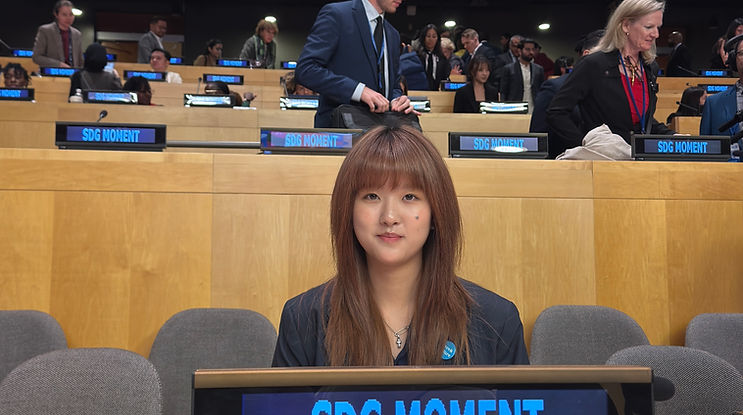
During UNGA80, global dialogues centered on gender equality, cultural sustainability, and inclusive economic transformation prompted me to reflect on findings from my recent fieldwork in Guizhou’s ethnic minority communities. These two experiences—one embedded in international policy debate, the other grounded in local realities—highlight a critical development opportunity that remains insufficiently explored:
The potential of cultural heritage to become a foundation for women-led social enterprises.
This insight is not merely a conceptual proposition; it emerges from both structural challenges and observable innovations within communities where women sustain cultural knowledge yet remain excluded from the economic systems that could amplify its value.
Structural Challenges: The Underrecognized Labor Behind Cultural Heritage
Women in Guizhou and in similar communities globally face overlapping, mutually reinforcing constraints that limit their ability to participate meaningfully in cultural economies.
Economic Precarity – Cultural work is often informal, seasonal, and undercompensated. The absence of stable income structures or social protections renders women vulnerable to market fluctuations.
Limited Access to Education and Digital Infrastructure – Gaps in digital literacy, design training, and online market access restrict women’s ability to scale their work or connect with broader consumer networks.
Gendered Social Norms and Decision-Making Exclusion – Even where women hold the highest level of cultural expertise, leadership roles in cooperatives, associations, or cultural enterprises often default to men.
Commercialization Risks – Without adequate protections, attempts to monetize heritage can lead to cultural dilution, loss of authenticity, or appropriation—undermining the very systems communities seek to preserve.
These challenges illustrate a broader policy vacuum: cultural sustainability cannot be achieved without addressing the socioeconomic conditions of the women who maintain it.
Insights from Field Practice: Women as Agents of Cultural Innovation
My fieldwork underscored that cultural preservation is neither static nor inherently conservative. Women continually reinterpret cultural forms in response to contemporary economic and social realities.
One young artisan I met, for example, returned to her village after studying art and entered the male-dominated field of silverwork. Her practice demonstrated that cultural innovation can emerge from the convergence of traditional skills, creative reinterpretation, and digital communication tools. By engaging younger audiences on social media platforms, she expanded both the visibility and the perceived value of local cultural forms.
Such cases reveal an important insight:
when women gain access to education, technology, and market information, they become catalysts for transforming cultural heritage into viable and future-oriented enterprises.
This aligns with global evidence showing that women’s participation in creative and cultural industries contributes to inclusive growth, social cohesion, and community resilience—yet remains significantly under-supported in policy and financing systems.
Toward Policy Innovation: Centering Women in Cultural Economies
If the global community seeks to advance SDG 5 (Gender Equality), SDG 8 (Decent Work), SDG 11 (Sustainable Cities and Communities), and SDG 17 (Partnerships), then cultural heritage must be reframed not only as a preservation concern but as an economic and leadership opportunity for women.
Several policy directions emerge:
1. Capacity Building through Education and Digital Upskilling
Provide multi-level training that integrates traditional craftsmanship with business development, branding, digital storytelling, and e-commerce. This equips women to move from production to market participation and enterprise development.
2. Financial Inclusion and Equitable Market Structures
Microfinance instruments, cooperatives, and culturally aligned certification mechanisms can stabilize income and ensure fair value distribution. A “fair trade for culture” model could enhance transparency and preserve authenticity.
3. Governance and Leadership Pathways for Women
Policies must institutionalize women’s representation in decision-making roles across cultural associations, local cooperatives, and heritage governance structures. Leadership is not an outcome—it is a prerequisite for sustainable cultural economies.
4. Cross-Sector Partnerships That Protect Cultural Integrity
Governments, NGOs, universities, and private-sector actors can collaborate to secure intellectual property rights, strengthen value chains, promote responsible cultural tourism, and co-design enterprise models that safeguard authenticity while enabling innovation.
These strategies reflect a shift from viewing women as participants in cultural heritage to recognizing them as architects of culturally grounded development models.
The Case for Cultural Heritage as a Development Lever
Through both global dialogue and field research, I have become increasingly convinced that cultural heritage—when linked to women’s agency and entrepreneurship—offers unique advantages for sustainable development:
It preserves and revitalizes local identity while generating income.
It creates pathways for intergenerational skills transfer and youth engagement.
It embeds economic development in social meaning and community value.
It aligns with global movements toward inclusive, community-driven economies.
In essence, cultural heritage becomes not only something to protect but something to activate.
Conclusion: Moving from Preservation to Empowerment
The conversations at UNGA80 reinforced an emerging consensus: achieving the SDGs requires systems that integrate global frameworks with local knowledge and leadership. My experience in Guizhou showed me what this might look like in practice.
Women are already sustaining cultural heritage.
What they need are policies and partnerships that allow them to shape its future, transform it into new business models, and assume leadership roles within cultural economies.
Supporting women in this way is not only a matter of equity—it is a matter of sustainability.
Because when women lead cultural transformation, they generate economic opportunity, strengthen community resilience, and ensure that heritage remains both meaningful and alive.
Sally (Mei Ying) Li is a Research Fellow and Youth Entrepreneurship Project Leader at Love&Future, specializing in social entrepreneurship, gender equality, and sustainable economics. Her work focuses on empowering women and youth through inclusive economic models, particularly within ethnic minority communities. During field research in Guizhou, China, she proposed transforming traditional intangible cultural heritage into women-led entrepreneurship initiatives to drive community development. Currently, she leads a co-creation sustainable fashion brand with young women and minority artisans at Love&Future. By leveraging media platforms and advanced digital technologies, Sally connects minority-led sustainable fashion brands with global markets, amplifying women’s voices and promoting inclusive socioeconnomics development.